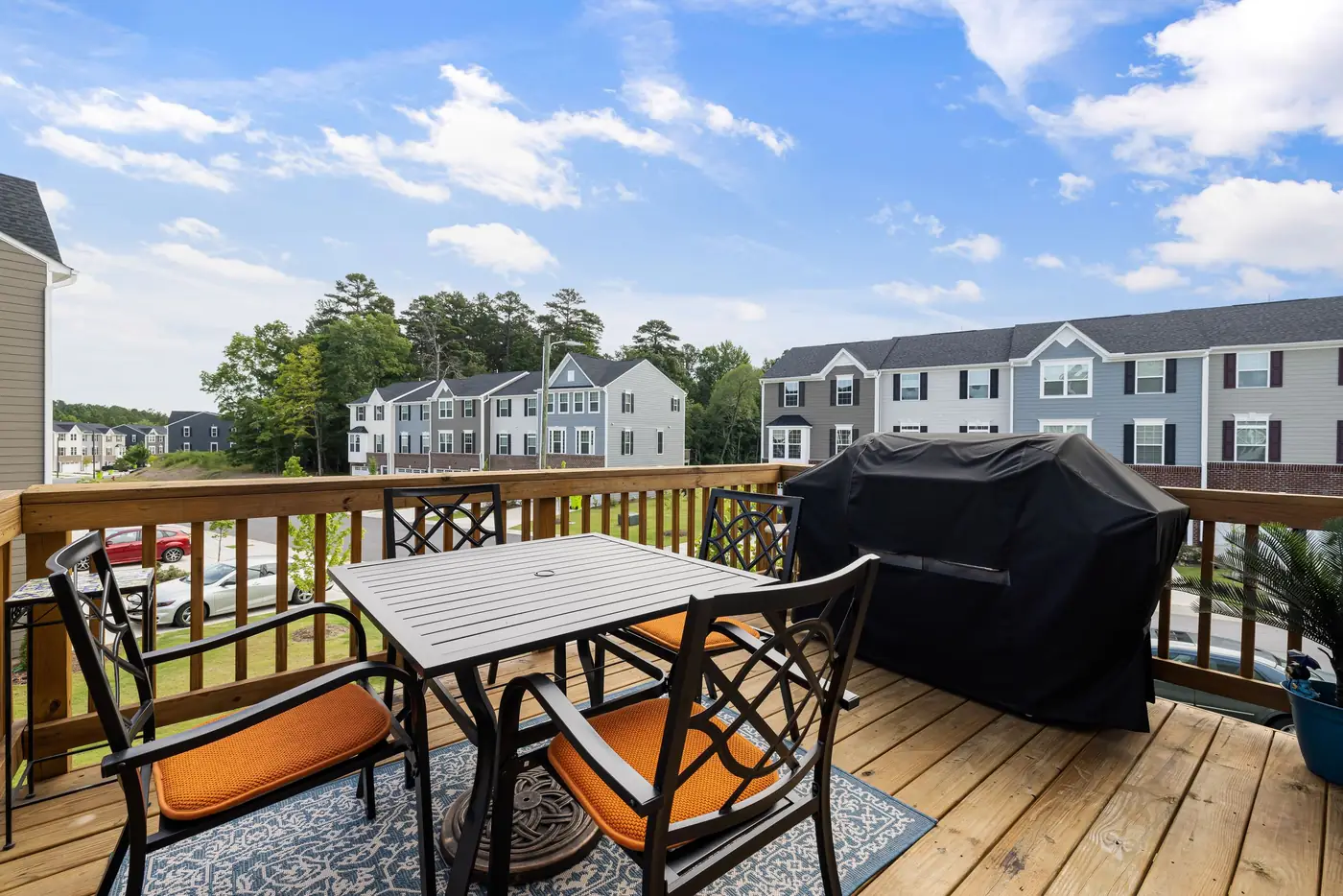
Composite Deck Everett WA — what capped composite and PVC actually are, how they fit the Everett climate, and what drives the quote. Fill the form and we pass your request to a local deck builder.
Takes 20 seconds. We pass your request to a local deck builder.
Composite Deck Everett WA — this page covers what composite decking is, how it fits the Puget Sound climate, the main product tiers, and what drives the quote. For an estimate on your composite deck project, fill the form below — we pass your request to a local deck builder.
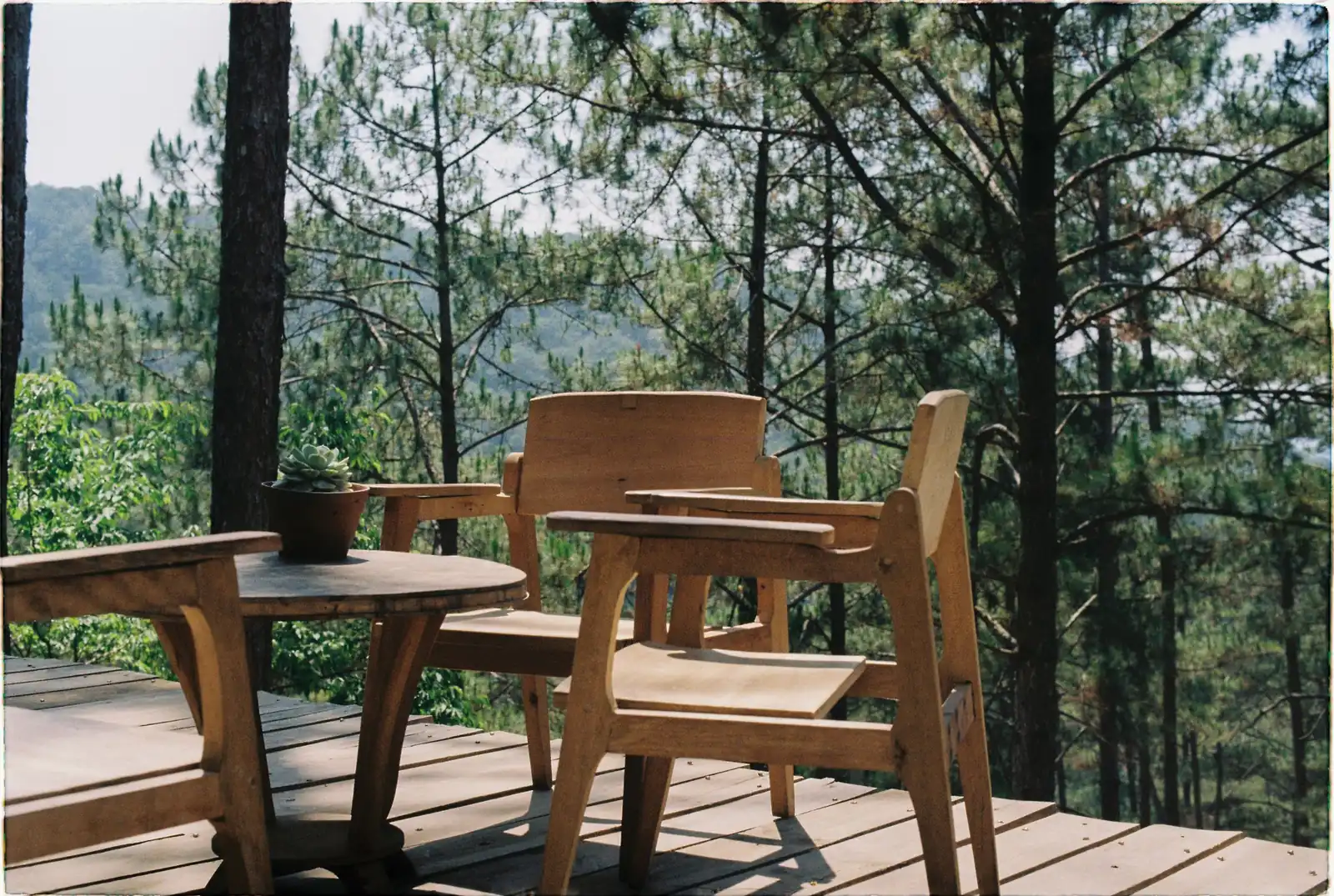
Composite decking is a manufactured board made from a mix of wood fiber and plastic, usually with a protective polymer cap on the top and sides. The cap is the thing that matters most for Everett's climate — it's what resists stain, mold, mildew, and the slow fade that plain wood goes through under cycles of rain and sun. Three tiers show up in most Everett projects:
Mid-grade capped composite. The entry point for brand-name composite — Trex Enhance, TimberTech EDGE, Fiberon Good Life, and comparable products. Looks and performs well in the Northwest climate. Comes in a limited color range per product line but every major brand covers the standard grays, browns, and warm reds.
Premium capped composite. Fuller color depth, more realistic grain pattern, often with better scratch resistance and extended material coverage from the manufacturer. Trex Transcend, TimberTech AZEK, Fiberon Concordia, and comparable tiers.
PVC / capped cellular PVC. No wood fiber in the board at all — pure polymer. Lightest option, highest moisture resistance, highest price. Most relevant for Everett waterfront or very wet-season-exposed decks where even capped composite might see occasional ponding.
Rain season performance. Everett gets about 35.71 inches of annual rainfall, concentrated October through March (Wikipedia — Everett, Washington). Wood decking in the Northwest needs periodic re-staining or re-sealing to resist the wet-season humidity, mold pressure, and freeze-thaw at the surface. Capped composite skips the re-stain step entirely.
Low maintenance total cost. Over the service life of a capped composite deck, total maintenance labor is often lower than a cedar deck even though the initial material cost is higher. The homeowner doesn't buy and apply stain, doesn't pay a contractor to pressure-wash and re-finish, doesn't replace split or cupped boards.
Color stability. Capped composite is more color-stable than untreated cedar, which goes silver-gray within one Puget Sound season unless re-finished.
Splinter-free surface. For families with young kids or barefoot summer use, the surface quality of composite is a durable advantage.
Composite surface boards still sit on a framed substructure — joists, beams, posts, and ledger. Three details matter in the Everett climate:
Pressure-treated joists. Standard. The composite surface protects the top edge of the joist from direct rain, but the sides and bottom still see humidity. Pressure-treated lumber rated for ground-contact or above-ground use (depending on height) is standard.
Joist tape. A thin flashing membrane applied to the top edge of each joist before the deck board goes on. Keeps water from pooling on the joist top where composite fasteners penetrate. The deck builder may include joist tape as a standard scope line in Puget Sound projects.
Drainage detail at the ledger. Where the deck frame meets the house, flashing has to shed water away from the siding and framing. A common failure point on older Everett decks is a bad ledger connection, not the surface.
Ventilation under the deck. If the deck sits close to the ground, the deck builder may frame in open ventilation or an under-deck drainage system to keep the framing dry.
Two installation approaches:
Hidden fastener system. Clips installed between boards into a groove cut into the board edge. The deck surface has no visible screw heads. Standard for premium composite installations. Looks cleaner, costs slightly more per linear foot of surface due to fastener product cost and labor.
Face-screw installation. Composite-specific color-matched screws driven through the top of the board. Less expensive per linear foot. More visible fastener pattern on the finished deck.
Either choice is standard practice in the Everett market. The deck builder walks through the trade-off during the quote — appearance vs. budget.
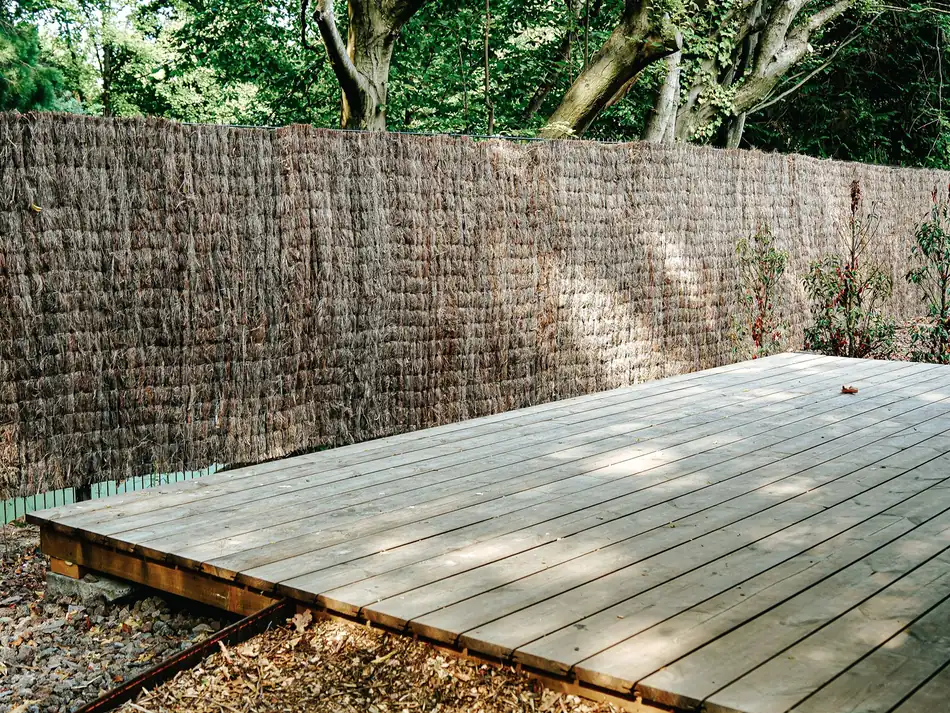
The railing is a separate scope line from the deck surface itself. Common combinations:
Composite railing matched to the deck. Full-system look. Highest aesthetic match. Usually most expensive railing option.
Aluminum railing with composite deck. Powder-coated aluminum balusters and top rail. Durable in the Everett climate, modern look, often lower cost than full composite railing.
Cable railing. Horizontal stainless-steel cables between posts. Maximum view preservation — the choice for Everett view lots facing Port Gardner Bay or the Cascades. Higher cost and more precise installation requirement.
Glass panel railing. Tempered glass panels in aluminum or stainless frames. Maximum view, premium look, premium cost. More common on waterfront or elevated decks.
Match the railing to how you'll actually use the deck. A family deck on a flat lot works great with aluminum balusters; a view deck overlooking the Sound might warrant cable or glass.
The direction and pattern of the deck boards affects both the appearance and the cost:
Straight boards perpendicular to the house. The simplest layout. Shortest install time. Lowest per-sq-ft labor. Looks clean, especially on smaller decks.
Diagonal pattern. Boards run at 45 degrees to the house. Adds visual length to the deck, hides minor imperfections in the framing layout, costs more in waste material and cut time.
Picture frame border. A border board around the perimeter of the deck with the field boards running inside. Classic high-end look. Adds material cost (border is often a contrast color) and labor.
Herringbone or inlay patterns. Decorative inlay sections, usually around transition areas like doors or stair heads. Significant cost add; usually only on premium projects.
For most Everett residential decks, straight-board or straight with a picture-frame border covers the aesthetic needs at reasonable cost.
Capped composite surface: manufacturer coverage varies by product. Lifespan varies by material and climate; the under-deck framing may need attention over time regardless — flashing details, fastener corrosion, joist condition at the ledger.
Routine maintenance for composite is minimal: periodic sweep of pine needles, leaves, and debris; occasional soap-and-water wash if dirt or algae build up. No stain, no seal, no refinish.
Permit rules depend on the scope — check City of Everett permits before work starts.
How much does a composite deck cost in Everett?
US national average for mid-grade capped composite is $28–$60 per square foot installed; premium runs $50–$70; PVC spans $17–$80 depending on brand. See deck cost in Everett for the full table with source links. The deck builder gives the final price after seeing the site.
What's the difference between composite and PVC?
Composite has wood fiber mixed with plastic and a polymer cap. PVC is pure polymer, no wood. PVC is lighter, more moisture-resistant, and typically higher-priced. For a dry-site deck, mid-grade composite is usually sufficient. For a very wet-exposed deck or a very long service-life goal, PVC may be worth the premium.
Will the deck boards get hot in summer?
Darker composite colors absorb more solar heat than lighter colors. Everett summers are mild (average August high around 73°F per Wikipedia — Everett, Washington), so this is less of an issue than in hotter climates. Ask the deck builder for color recommendations if direct sun exposure is a factor.
Can I install composite over my old deck frame?
Sometimes — if the frame is sound, correctly spaced for the composite you're using, and still structurally correct. The deck builder assesses the existing framing during the walk-through. In many cases the framing needs replacement or significant reinforcement, in which case the project becomes a deck replacement rather than a resurface.
How long does a composite deck installation take?
Depends on size, complexity, and weather. Ask the deck builder for a schedule estimate during the quote.
Fill the form above. A local deck builder can contact you to schedule the on-site walk-through.
Get My Estimate →